Pages

Showing posts with label SLJ Week 3 Day 2. Show all posts

Sunday, 23 December 2018

Summer Learning Journey Week 3 Day 2

DAY 2: The Air Up There


Activity 1: Bee Informed [4 points]
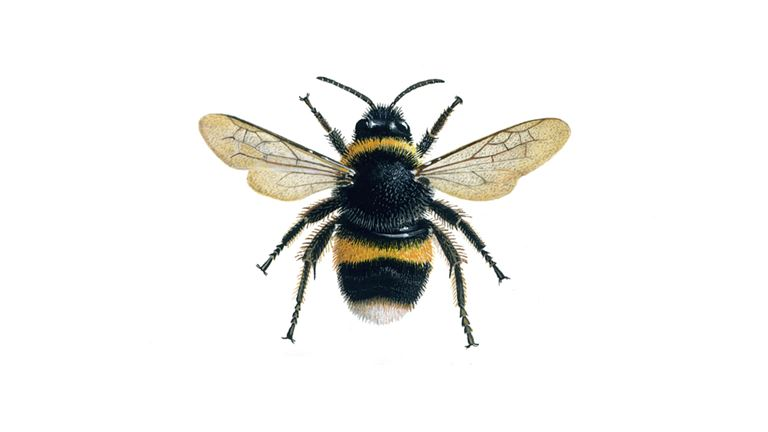
One of the most important, but least talked about, animals in New Zealand is the bumblebee. It was first introduced to New Zealand in 1885 to help pollinate a special plant called the ‘Red Clover.’ Today, bumblebees do many other important jobs, including the pollination of greenhouses and orchard crops. If the bees did not pollinate the plants, they would not survive.
For this activity, we would like you to become detectives and learn more about the mysterious, and often ignored, bumblebee. We will provide you with four sentences about bumblebees from the NZ Bumblebee Conservation Trust website and it is your job to fill in the blanks with the missing information.
On your blog type out the four ‘Unbee-lievable Facts about Bumblebees’ and fill in the blanks for each one.
Unbee-lievable Facts about Bumblebees
  1. The word ‘bumblebee’ is a compound word (bumble + bee). The word ‘bumble’ means to hum, buzz, drone, or move ineptly or flounderingly.
  2. Bumblebees can fly very quickly. They can reach ground speeds of 15 kilometres per hour (km/h).
  3. Bumblebees can do more work and carry more pollen than other bees, including honeybees. In fact, they can do 50  times as much work as a normal honeybee.
  4. The number of bumblebees is declining in New Zealand due to a number of factors, including industrial agriculture and climate change . [insert any two causes of the declining number of bumblebees].


Activity 2: Carbon Sinks Don’t Stink! [4 points]
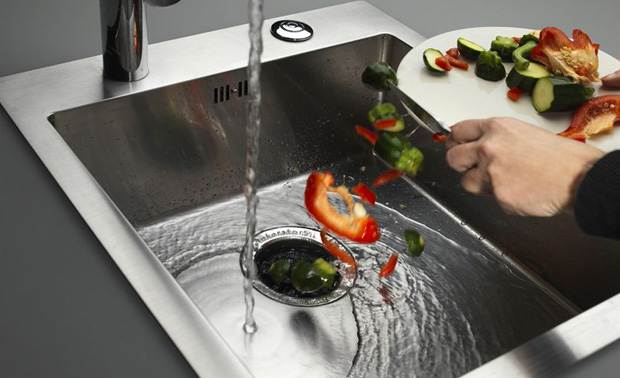
Every day a chemical compound called carbon dioxide (CO2) is produced and released into the air.  If it isn’t removed, it can become toxic for humans. Fortunately, there are a number of places where CO2 is absorbed (removed from the air). Two of the most common places are forests and oceans. They are called ‘carbon sinks’ because, like a sink, they gather, clean and drain things away that we don’t want. One of the largest carbon sinks in New Zealand is a forest in the south-western part of the South Island. It drains away 60% of our unwanted carbon!
Let’s imagine that you could design a sink that could gather up and then drain away any foods that you don’t like. On your blog, tell us what you would put in your special sink. If it was me, I would put rice pudding, brussel sprouts, custard, parsnips, and seafood chowder in the sink. Yuck! What about you?
On your blog, list all of the foods that you would put in your special draining sink.
A list of all the food I would throw away in to my special draining sink. (All the foods I don't like)
  • Eggplants
  • Mashed Potato
  • Peas
  • Peppers
  • Rock Melons
  • Pumpkin
  • Cumber
  • Zucchini


Activity 3: Flying Fungi [10 points]
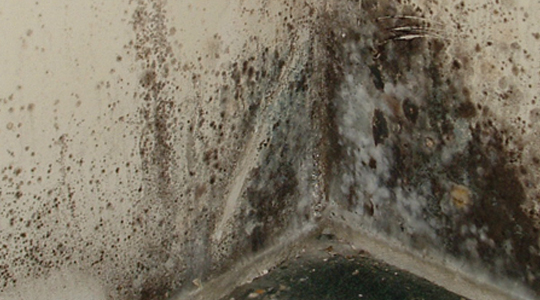

In the middle of winter it can get quite wet and damp in New Zealand, can’t it? When it gets really damp, it is common for things like mould and fungi to start to grow. We can often see them on the walls, ceilings or floors of our houses or outside on footpaths, buildings or roadways. Some types of mould and fungi are so small that they can’t be seen. Some of these tiny fungi/mould can be found in the air. They are called ‘airborne fungi’ and they can be unhealthy for us.
Let’s imagine that we tested the air in your classroom and found 7 different kinds of mould. Eek! The cleaner says that it takes 5 days for each mould to be eradicated (removed). If the school had to remove each mould one at a time, how long would it take to remove all the mould from the classroom?


On your blog, tell us how you would solve this tricky math problem. Be sure to also post your final answer in days or weeks.

Wednesday, 3 January 2018

Summer Learning Journey Week 3 Day 2


Day 2: Peace Out! (The 1960s)

Activity 1: The Dawn of Television
In the 1960s there was a great deal of change in New Zealand. Technology was evolving and the television was introduced for the first time into New Zealand homes in the 1960s. Popular programmes included Town and Around and C’mon.  Television remains popular to this day.

What is your favourite television show at the moment? On your blog tell us about your favourite television show. What is it about? Who are the main characters? What channel is it on?

My favorite Tv show is Called Spongebob SquarePants. The main character is Spongebob and his best friend is Patrick Star. Spongebob loves his job but there is one evil Plankton named Plankton. He wants to steal the secret secret formula for the Krabby Patty and rule the world but Spongebob and his boss (Mr Krabs) is always there to stop him. I don't know what channel it is on but i'm pretty sure its on channel 2 on free view.


Activity 2: Rock ‘n’ Roll
Famous bands also started travelling across the world and in 1964, New Zealand hosted, arguably the most popular band of the time, The Beatles.

People were very excited to see The Beatles, and the hype around the band was known as Beatle-Mania (similar to the modern-day Bieber-Fever)!

Read about their tour of New Zealand below, and then post three interesting facts about The Beatles Tour on your blog.


.


The Beatles' first stop in New Zealand was Wellington. Seven thousand screaming fans – nearly all young women – waited as the band touched down on 21 June 1964. One girl badly hurt her leg trying to climb a wire fence, and two others were forced through the fence because of pushing from behind.

A team of 30 police officers, some in plain clothes, was on hand. Bill Brien, in charge of the operation, later said that:

“We underestimated the whole thing badly. The crowd was so big we had to … keep all the people behind a wire fence. At one stage it looked like the fence would collapse, which would have been a disaster.”

As the band stepped off the plane, the shrieks of fans drowned out the noise of the engines. Te Pataka concert party performed a haka, before doing a hongi (pressing noses) and presenting the band members with tiki.

From the back of a Holden utility, The Beatles waved to fans who lined the roads from the airport to town. The crowds outside their hotel, the St George, were so large that The Beatles had to be taken in secretly through the bottle shop entrance of the hotel. Management rushed the band up to the third floor balcony so fans could see them and not crash the hotel.

It was mayhem. 'Girls were screaming uncontrollably, quite out of their tree,' people remembered. Police used dogs to clear crowds from verandahs and other vantage points. Teenagers pushed over and damaged two police motorbikes; there was so much pushing that one of The Beatles’ cars was shunted backwards, even with the handbrake on.

Fans trekked back to The Beatles' hotel after the concert. The band was stuck inside as crowds gathered outside. Some kept up a late-night vigil on the hill behind the hotel. Others tried to get round the strict security; four girls strolled onto the sixth floor into the arms of Ringo Starr. His response was, ‘Now girls, no nonsense or else I’ll leave.’

Away from all the fuss, two of the band members took the chance to catch up with family. Police whisked John Lennon away to Levin to meet his second cousins, while Ringo Starr (formerly Starkey) met a group of Starkeys from the Wellington suburb of Karori.


Three facts about the Beatles
1. There First stop was at Wellington in New Zealand
2.There were more than Seven thousand screaming fans.
3.One girl badly hurt her leg trying to climb a wire fence, and two others were forced through the fence because of pushing from behind.


Bonus Activity: The Three Rs - Rugby, Racing and Running
In the 1960s, sport in New Zealand was dominated by the three R’s – rugby, racing and running. The national rugby team, the All Blacks, had a great decade, winning 36 of the 40 games that they played. Many kiwis also spent their week-ends at the local racetrack and, in 1960, Peter Snell won a gold medal in the 800m race at the Olympic Games in Rome, Italy. He followed this up with two more gold medals in the 800m and 1500m races at the 1964 Olympic Games.

Watch this documentary about Peter Snell and then create a one-page poster on Canva* about this famous kiwi runner. Be sure to include a picture  of Peter along with information about his interests and other sporting accomplishments.

*You will need to register on the Canva website in order to use it. To register, first you will need to choose your poster template from the homepage. This will bring up the sign-in page. Click on the ‘Register with Email’ button and enter your details.

Here is the poster i created about Peter Snell


BONUS POINTS: 14